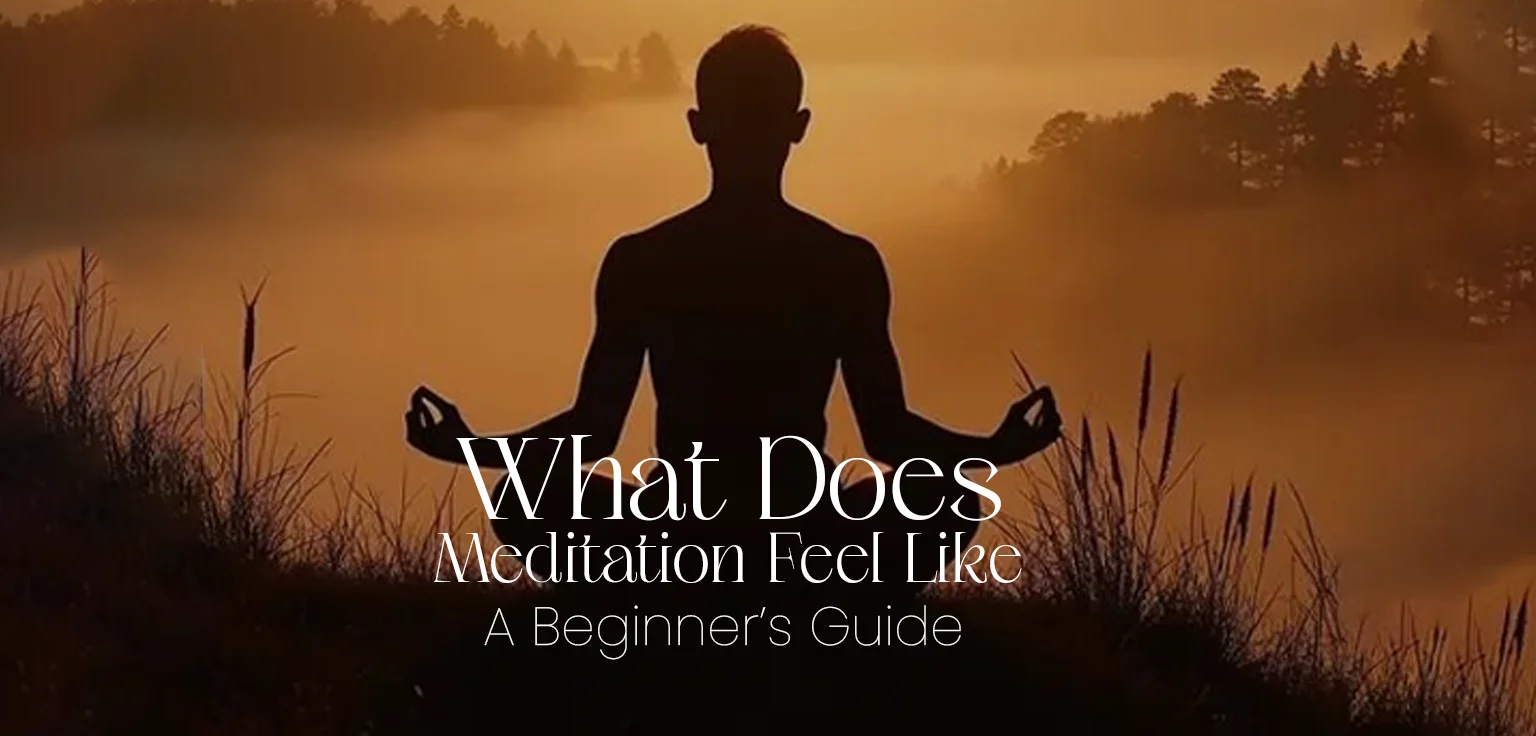
What Does Meditation Feel Like for Most Beginners?
For most beginners, the first meditation experience is not that peaceful silence they kind of expect. Instead, the mind feels louder than usual, and somehow it’s like everything speeds up. Thoughts come in fast, plans, memories, random worries, and it can feel like that mental noise gets stronger the moment you decide to sit still. This surprises a lot of people.
The body can also feel a bit restless, or just off in a quiet way. You might notice small discomforts you normally push aside : your back, your breathing, or even that simple sensation of sitting there. Nothing is wrong with you here. When the external distractions fade, the internal activity becomes more noticeable, sort of sharper.
Some people do get brief moments of calm, and those moments are usually short but you really can feel them. Like a small gap between thoughts, a little breath in the middle. It may feel light or spacious, almost like a tiny pause in mental activity.
The most important truth is this: there is no correct first experience. Whether your session feels calm or more chaotic, it still counts as meditation. The process starts by just noticing what is already there, without forcing it to be anything else.
Feature Article: Top Books About Finding Yourself: Powerful Self-Discovery
What Does Meditation Feel Like When It Starts to Work?
As meditation becomes more familiar, changes start showing up quietly, you not something dramatic right away. You might not catch them during the session, like right there. Instead, they show up in ordinary life, how you respond, how you think, what you do when things happen.
One of the first signs is awareness. You begin to notice your thoughts more clearly, instead of being completely dragged along by them. It feels like stepping back a little from your mental happenings rather than being in there all the time, like glued.
Emotional reactions also start to soften. Things that used to trigger stress may still come up, sure, but your reaction feels less sharp. There’s this small space between what happens and how you react, and with practice that space seems to slowly get bigger.
Over time, people also say they feel calmer after meditation, not always during it. And that matters, because meditation itself, in the moment, doesn’t always feel peaceful or sweet. Usually the effects arrive later, with a steadier mind and more balanced feelings.
Does Meditation Feel Good or Can It Feel Uncomfortable Too?
Meditation can feel kinda good but also uncomfortable, like not totally one thing, sometimes in the same session. You might notice moments of calm, clarity, and this lightness, especially after you keep at it, fairly consistently. And those moments sorta feel like mental space is opening up, even if it’s subtle.
Still, discomfort shows up too. When you slow down you become more aware of what’s already there inside you, stress, boredom, frustration, or even sadness. It can feel unexpected, almost like, “oh, so this is here.”
Some beginners get sleepy or restless. Other people feel emotionally sensitive, or they get teary, for no dramatic reason. These reactions are not proof that something is wrong. They’re more like signals that the mind is finally not getting distracted the whole time.
Over the longer run, these ups and downs tend to even out. Meditation may not always feel “good-good”, but it helps you see your inner world more clearly. And that clarity, eventually, supports a deeper and steadier calm.
Feature Article: The Best Personal Discovery Books to Transform Your Life and Guide Your Journey Within
What Happens When You Meditate Regularly?
With regular practice, meditation starts to feel like less of a “task” you do and more like this thing that quietly shapes how you live. At the beginning the changes won’t feel huge, it’s more that they stack up over time, in small, almost sneaky ways.
You might notice your attention gets better. Like you can stay with one job without constantly getting pulled away by distractions, over and over. That’s kinda one of the most typical early benefits from being consistent.
Then emotional steadiness begins too. Stressful moments still show up, sure, but the inside reaction isn’t as sharp. You find yourself bouncing back faster after emotional triggers, rather than getting stuck there for long stretches.
Another part that tends to grow is self awareness. You start seeing your thoughts more clearly, kind of like observing patterns instead of being led around by them. And somehow this puts some room between impulse and action, so you don’t just react on autopilot.
Later on, when you’ve practiced long enough, even your understanding of what’s happening during meditation gets clearer. You realize it’s not about running away from thoughts, it’s more about learning how to be with them differently.
What Does a State of Deep Meditation Feel Like?
A state of deep meditation is usually described as quiet, but somehow not empty? Like, thoughts can still show up , yet they feel more far away, less sticky I guess. It is not really about pushing the mind to shut down, it is more like noticing what is there without any tightness or tension.
Often you get this spacious feeling, a bit like there is room around everything. Time might feel a little slower or just less central. You are not really pulled hard into past or future thinking either, you’re more anchored in the present moment.
The body sometimes feels very calm, almost weightless at times. Breathing turns into something natural, unforced, and it happens without you needing to “make” it. There is no effort involved, more like awareness of what is already occurring, quietly.
In deeper states, the mental chatter tends to lessen on its own. It doesn’t always stay gone for long, especially if you’re newer, but even brief moments can feel pretty clear and peaceful, not so dramatic though.
Feature Article: Spiritual Healing for Couples: A Transformative Journey to Reconnect and Grow Together
What Is the Purpose of Meditating in Everyday Life?
The whole purpose of meditation isn’t really to escape life, more like to feel it more cleanly, i guess. It helps you notice your thoughts, emotions, and reactions, without immediately getting yanked around by them. From there, there’s this small opening, for better decisions to show up.
In everyday life, meditation supports emotional steadiness, not just calm for a minute. You become less reactive and more tuned in to how stress forms and then eventually moves away. Then even the tougher situations feel a bit more manageable, without going so far as to overwhelm your system.
It also grows presence. Instead of constantly drifting into past regrets, or jumping ahead into future worries, you start to stay more rooted in the current moment. This little shift changes how life feels overall, honestly.
For readers who connect more deeply with emotional healing through narrative rather than plain step-by-step instruction only, C.A. Williams’ book The Mending Of Broken Hearts can be a reflective companion. His writing sits right at the intersection of stillness, emotional truth, and personal transformation, so it feels like a natural next step for anyone exploring meditation not only as a method but as part of a deeper internal journey.
So in the end, the purpose of meditating isn’t perfection, it’s awareness. It helps you understand your mind, instead of letting it run the show.
Feature Article: Powerful Quotes About Meditation to Inspire Peace and Clarity
Final Thoughts
Meditation is often seen as some kind of forever peaceful thing, like you have to be calm, no matter what. But honestly the meditation experience is mixed, very human, and sometimes not predictable at all. Certain sessions feel steady , other times everything feels fidgety or restless, and somehow both kinds belong to the very same path.
Over time, what really changes is not that thoughts disappear. It’s more like your relationship with them. You start to notice, to watch, instead of just reacting right away. And that small shift can change how you experience regular daily moments, day by day.
The point isn’t to push a specific feeling. It’s just to keep showing up, even when it feels simple , or when it doesn’t. With patience, meditation moves away from constant striving, and starts being more about awareness.
FAQs
How do you know if you’re meditating correctly?
If you are aware that your mind is wandering and gently bringing it back, you are meditating correctly. There is no perfect state required.
What does it mean if you cry when meditating?
It means emotional release is happening. Stored feelings can surface when the mind becomes still. It is normal and often healing.
What if meditation doesn’t work for me?
Meditation still works even if it feels difficult. Results are subtle and show over time in behavior and emotional response, not instant calm.
How do I know if meditation is working?
You notice it in daily life: less reactivity, better focus, and more awareness. The effects are gradual but steady.
Does meditation feel good?
Sometimes yes, sometimes no. It can feel calm, boring, emotional, or quiet. Both comfort and discomfort are part of the process.

 Blogs
Blogs  Blogs
Blogs  Blogs
Blogs  Blogs
Blogs  Blogs
Blogs  Blogs
Blogs